Friday, December 13, 2013

Maddison Wright
Intro to Art History
11/21/2013

Mesopotamia

The region of Mesopotamia, like many other ancient nations, had very defined and careful carvings and sculptures. Unlike Egypt, Mesopotamia (which is now present-day Iraq) sought to have more political meanings to there architectural structures. The first cities built around the southern region of Mesopotamia were by the Sumerians around 3400 B.C.E. Though their reign was short, they left artifacts and key symbols for their language they had developed, called cuneiform. A temple they had built called the ziggurat, was strategically placed on high grounds to acknowledge the belief that the higher up one was the closer to heaven they were. This shrine was built as a place of worship where priests would travel up the many stairs to talk with their gods above - and more specifically this structure was dedicated to the moon god Nanna. Though most of their art pieces were used with clay, one piece called the Ram in Thicket used wood, stone, and gold foil to complete the ten inch sculpture. Sumerian art showed attention to detail and much of a decorative style throughout their art forms. 
When Sumerian cities were no longer standing due to the destruction by people of Akkadian, the Akkadians established the first empire built in that region. They as well produced amazing art such as the one named the Head of an Akkadian ruler (sculpted in bronze). This piece suggested the replication of an actual person, or ruler, in their empire because the craftsmanship was so precise. This is looked at as a naturalistic piece which was not usually the type of art made during that time. Akkadian artists liked to create majestic-like creatures in their art to frighten visitors. 
In the 7th century B.C.E. Babylonians built an arch-like structure with glazed ceramic bricks that was called the Ishtar Gate. Under the gate was Nebuchadnezzar, an art patron who constructed the capital city in Babylon (and later became ruler over the Babylonians), their he sat receiving his subjects. Babylon’s art culture is a foundation for many of the art made today, they had used many different materials including zinc, gold, terracotta, etc. 

Mesopotamia not only used their art for beauty and pleasure, but had symbolic ideas behind sculpting all their pieces. 


Nanna Ziggurat, mud-brick, 2100-2050 B.C.E.


Ram in Thicket, wood, gold foil, and lapis lazuli, 2600 B.C.E.


Ishtar Gate, glazed brick, 575 B.C.E.
Maddison Wright
Intro to Art History
11/12/2013

Henri Matisse & Pablo Picasso

Pablo Picasso, the most famous artist to be accredited for his work when alive; his work continuously struck awe in the people. Picasso was born in 1881 in the city of Malaga, Spain. He was a superstitious, sarcastic, charming man with several women in his life (and eventually those women attributed to many of his paintings). Picasso was a part of the Cubist movement and may art periods such as the Blue period, Rose period, and Neoclassical period. In his paintings contributing to the Blue period Picasso sought to draw images of poverty and depression. A painting from his Blue period I remembered seeing when I was younger, called The Old Guitarist, paints a man weakly grasping onto a guitar in time of his sadness. The man looks poor and on verge of death, with his guitar being the only object not in a shade of blue - the guitar might symbolize his only means of expressing his depressed mood. The period I personally relate Picasso with the most is his Cubist period; this period came along with paintings such as the Factory, Horta de Ebbo and Three Musicians. An example of one of his Expressionistic paintings is titled Woman with Yellow Hair. Woman with Yellow Hair was painted after a young women whom he had an affair with when the girl was only seventeen. 
Another man with much talent was named Henri Matisse. Henri Matisse was an artist known for his paintings, though also worked in other artistic fields such as sculpting, book illustrations, architectural design, and decoupage. He was born in 1869 in Nord, France, to parents that would push for his career to be in law. Unfortunately at age twenty-one Matisse had severe appendicitis. Not being able to do much at the time, his mother bought him a paint set and at that moment his life would soon dramatically change into something amazing. He attended art schooling with his teacher telling him he was, “born to simplify painting” (Gustave Moreau). Matisse was slightly opposite of Picasso, being a cautious, reserved, cheerful, hardworking, dedicated family man. He loved painting outside of the political and social subjects - only wanting to paint the human body and pleasant themes. Matisse along with artist Andre Derain founded the Fauvism movement; he painted pieces such as Woman with a Hat and Les toits de Collioure. Matisse as well worked in the movements of modernism and impressionism; he continued to be involved in art until he passed away in 1954. When he was too old and could no longer stand up to paint he sat on  his bed and cut out colored paper making collages of mural sized pictures. 

Pablo Picasso and Henri Matisse were differing in personalities, which brought such diverse forms to their art works. Both artists conveyed such powerful emotions, though I feel Picasso had a much broader form of emotions in his pieces opposed to the Matisse’s more positive-filled themed paintings (usually with vivid colors). 


Pablo Picasso, The Old Guitarist, 1903, Oil painting


Pablo Picasso, Factory, Horta de Ebbo, 1909, Oil painting


Pablo Picasso, Three Musicians, 1921, Painting


Pablo Picasso, Woman with Yellow Hair, 1931, Oil Painting


Henri Matisse, Woman with a Hat, 1905, Oil painting


Henri Matisse, Les toits de Collioure, 1905, Oil painting


Henri Matisse, Carmelina, 1903, Painting


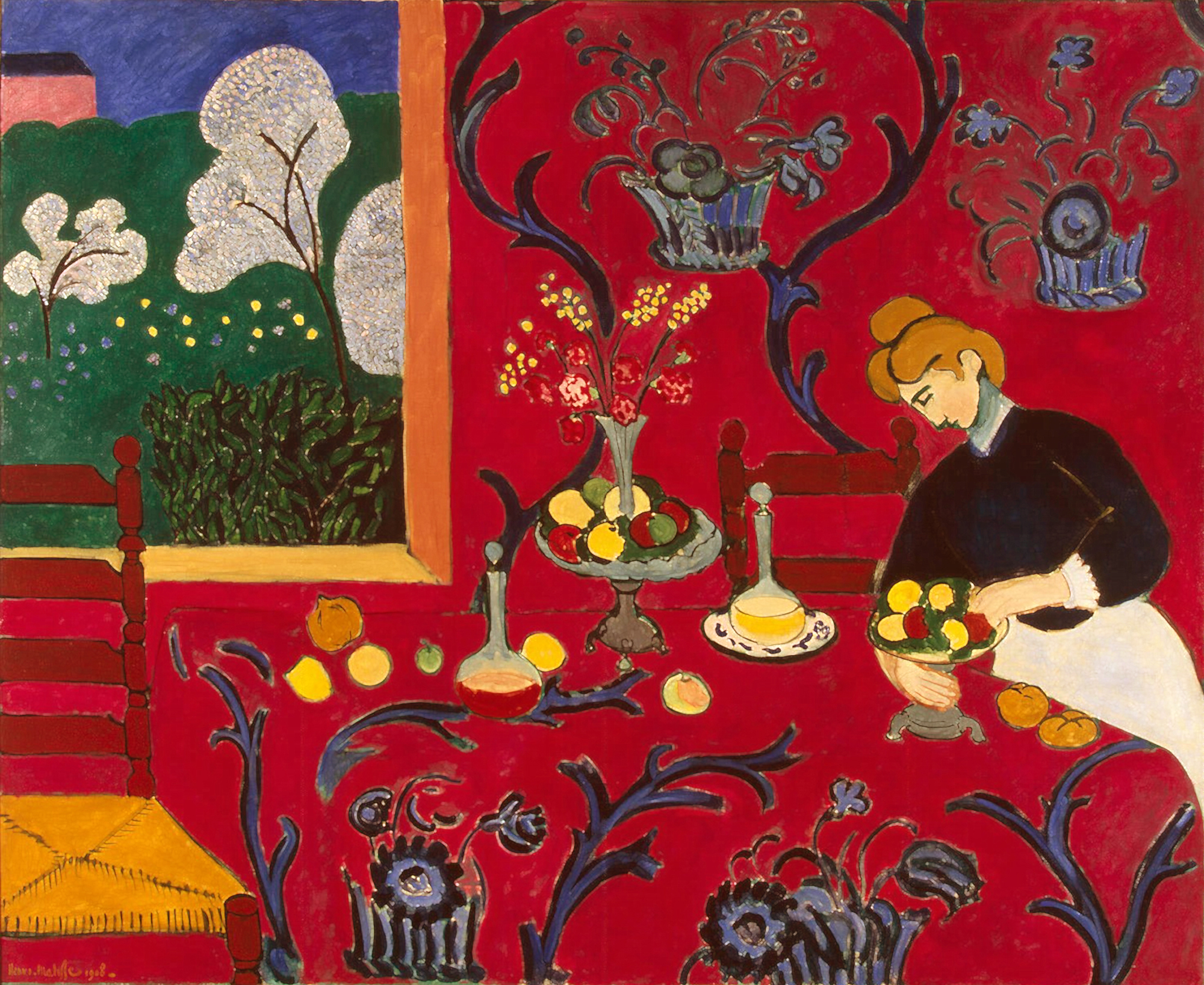
Henri Matisse, The Red Room (Harmony in Red), 1908, Painting


Maddison Wright
Intro to Art History
11/4/2013

Georgia O’Keefe & Kathe Kollwitz

When reading about specific artists who came before us most autobiographies of those famous artists consist of men, not women. Though two women artists stand out between the 1800’s and 1900’s, their names are Georgia O’Keefe and Kathe Kollwitz. Both took some type of formal art education before contributing to the imagination and creativity of the art world; both embody strong individualistic women.
Georgia O’Keefe was born in Wisconsin but spent most her time perfecting her art in New Mexico (where she worked best). This place became one of the reasons O’Keefe and her husband Alfred Stieglitz could not be together most of their lives, they both had busy schedules. Stieglitz would continually exhibit O’Keefe’s paintings while he photographed for his fulfillment of his own passion. When Stieglitz first saw O’Keefe’s art work he said the collection was the “purest, finest, sincerest things that had entered 291 in a long time” (Stieglitz). This is relating to the 291 exhibit O’Keefe entered; O’Keefe was not a part of any art movement. Although most of her work seems abstract and colorful; for instance her oil painting titled Black Iris III is said to depict female genitalia while representing an iris flower. Her famous painting, The Lawrence Tree, at first could look like nothing but randomly placed shapes and lines, but when looked at with a different view in mind, it becomes a tree when laying on the ground and looking upward at the stars around you.  Most of her works as well seem to take a magnifying-glass view. Her paintings remind me of a scientist looking under a microscope and viewing the tiny particles that make up a bigger substance. During O’Keefe’s early life she had started painting flowers as if they were viewed up close. She had also stated in her early thirties that painting, “seemed to be the only thing I could do that didn’t concern anybody but myself--that was nobody’s business but my own.” I feel Georgia O’Keefe, like many artists, considered art as her only outlet to truly illustrate how she goes about thinking up ideas. 
Another well accredited female artist is Kathe Kollwitz, who when found that painting was not her calling focused on her prints and drawings (with a few sculptures). Her art work was primarily black and white and I think this worked for her because her art works were already strong images alone, they did not need the added color to make them any stronger. Kollwitz was born in what is now Russia, to a radical social democrat as a father. Her father took notice to her talent and enrolled her in one of the best art schools that aloud women at the time. Kollwitz art works demonstrated her passion for certain issues including herself as an artist, the relationship between a mother and her child, hardships of the working classes, cruelties of war, and her obsession with death. During World War I and II Kollwitz lost a son and grandson. She understood the themes she drew about because she had lived through them; Kollwitz became a part of the Expressionism movement. 
Georgia O’Keefe and Kathe Kollwitz are some of the greatest female artists known today. Their work will continue to be appreciated with O’Keefe’s abstract paintings and Kollwitz’s gut-wrenching sketches of the hardships of life. 


Georgia O’ Keefe, A Sunflower from Maggie, 1937, Oil painting


Georgia O’ Keefe, Black Iris III, 1926, Oil painting


Georgia O’ Keefe, The Lawrence Tree, 1929, Oil painting


Alfred Stieglitz, portrait of Georgia O’ Keefe, 1918, Photography


Kathe Kollwitz, Pieta, 1937, bronze sculpture


Kathe Kollwitz, Women with Dead Child, 1903, etching print


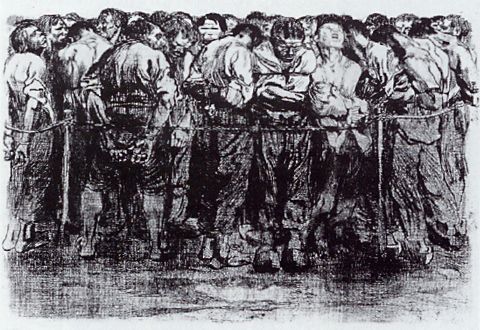
Kathe Kollwitz, The Prisoners, 1908, etching print


Kathe Kollwitz, Mother with Child, 1910, etching print

Maddison Wright
Intro to Art History
10/29/2013


Vincent van Gosh and His Influences
Influences are all around us whether through objects or people, they continue to change our ways and thoughts. Without influences our world would not be able to progress as well and art works, people, events, and many more would go with less appreciation. The famous painter and essayist Clement Greenberg states, “The superior artist is the one who knows how to be influenced.” This holds true to every artist through his/her works. 
An artist in particular who was greatly influenced and eventually even made his works brighter was Vincent van Gogh. Besides Jean Francois Millet, one of van Gogh’s greatest influences was a man named Paul Gauguin whom he met in Southern France at an art exhibit. The two traded art pieces and from there van Gogh persuaded Gauguin to stay in his “Yellow House” so they could continue to influence each other through their art works. In the beginning both painters used coarse canvas Gauguin bought, forcing them to grab a lot of paint onto their canvas and create thicker brush strokes. These two were working together great in that yellow house before van Gogh impulsively cut his ear off and threatened Gauguin with a knife. After this incident Gauguin quickly fled back to Paris. Though these two lost their good friendship they once had, van Gogh was inevitably influenced much by Gauguin and vice versa. Van Gogh’s paintings showed more free detail through his imagination rather than creating realistic pieces. This was due to Gauguin’s technique of remembering how places or people looked through just his memory, rather than visiting those sites. Gauguin was influenced by Van Gogh’s religious background, which then showed through his art pieces. He also starting creating brighter pieces with thicker brush strokes, just as he saw van Gogh’s works demonstrate. An example of one of Gauguin’s brighter pieces is an oil painting on canvas titled Arearea (in English meaning Joyfulness). The use of less dull colors first came with Gauguin’s view of van Gogh’s vibrant sunflower sketches and paintings, one of them titled Vase with Fifteen Sunflowers
Before becoming greatly influenced by Gauguin, Van Gogh was also very much influenced by the Impressionists. When he arrived in France, his brother Theo introduced him to art works by Claude Monet. Van Gogh was taken back in awe considering he had only seen art pieces of Dutch paintings and French Realists. He began to study these impressionist artists and saw how many bright colors they incorporated through their paintings. Van Gogh also observed the use of brush strokes broken up and saw a different style being used called Neoimpressionism (or Pointillism). At one point van Gogh was even influenced by Japanese prints and later makes his own Japanese woodcuts using the color palette he saw give life to the prints. 
Vincent van Gogh strikes us as a complete individualist yet everyone is influenced by something or someone, just as Van Gogh was influenced by Paul Gauguin and an important movement. Observing other artists’ works most likely made van Gogh a better artist; he continued to learn from other individuals and places around him.


Joyfulness, Paul Gauguin, Oil painting, 1892


A Basket of Potatoes, Surrounded by Autumn Leaves and Vegetables, Vincent van Gogh, Oil painting, 1885


Vase with Fifteen Sunflowers, Vincent van Gogh, Oil painting, 1888
Maddison Wright
Intro to Art History
10/22/2013

Leonardo da Vinci and Michelangelo Buonarotti

Leonardo da Vinci born 1452 in Italy, was a complex individual who never married. Not only was he a painter in the High Renaissance but a skilled architect, engineer, and contributed to developing the studies of human anatomy and physics of motion (despite his lack of formal education). He used his understanding of the human anatomy to further his sculpting abilities although today none of his sculptures have been found to display publicly. One fact about Leonardo is that he kept a notebook with his ideas and sketches and to ensure no one could read them he wrote everything backwards. Although many subjects interested Leonardo, it seems he longed to live a life without chaos. Trying to simplify everyday life he decided to create designs to reroute rivers, contribute to urban planning, help eliminate stressful aspects to the pedestrian streets, and many other approaches.
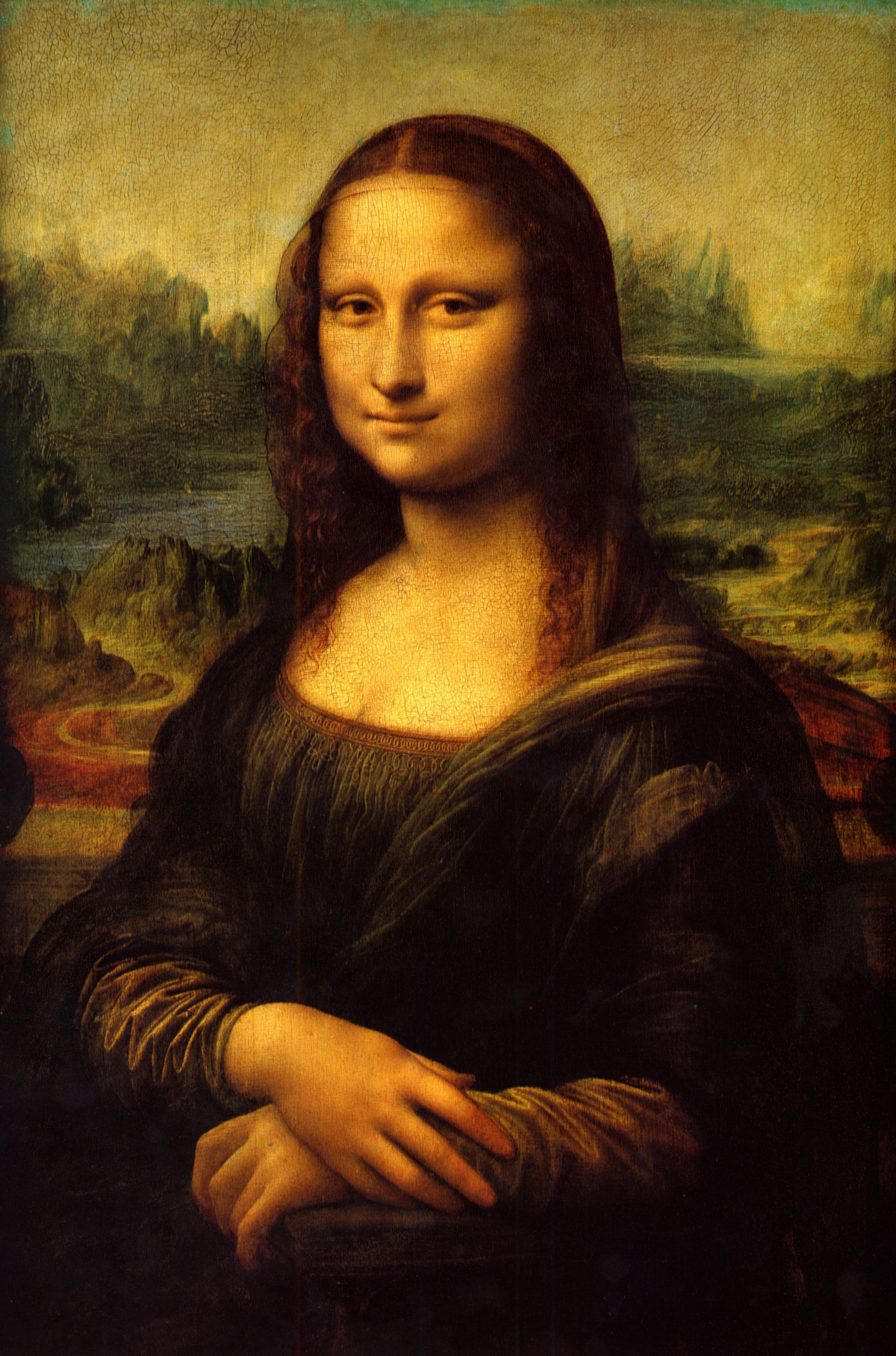
When hearing the name Leonardo da Vinci people attribute him to one of the worlds greatest painters. As young as age fifteen years old Leonardo set off to become an artists’ apprentice named Andrea del Verrocchio. It has been said that this Florentine artist was so impressed by Leonardos works that she quite her life as a painter; Leonardo is considered to be the greatest Naturalist painters of all time. His genus also brought a new concept to the art of painting, it is called Sfumato, meaning smokey affect and is used to present atmospheric dimensions. Achieving all of this and becoming a master in the arts at age twenty it’s no wonder he traveled throughout Italy working for well-to-do patrons.
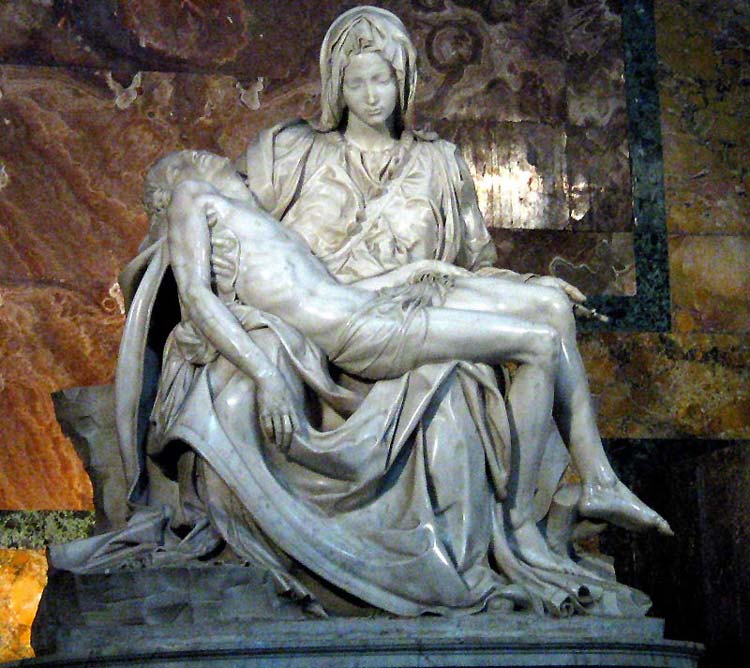
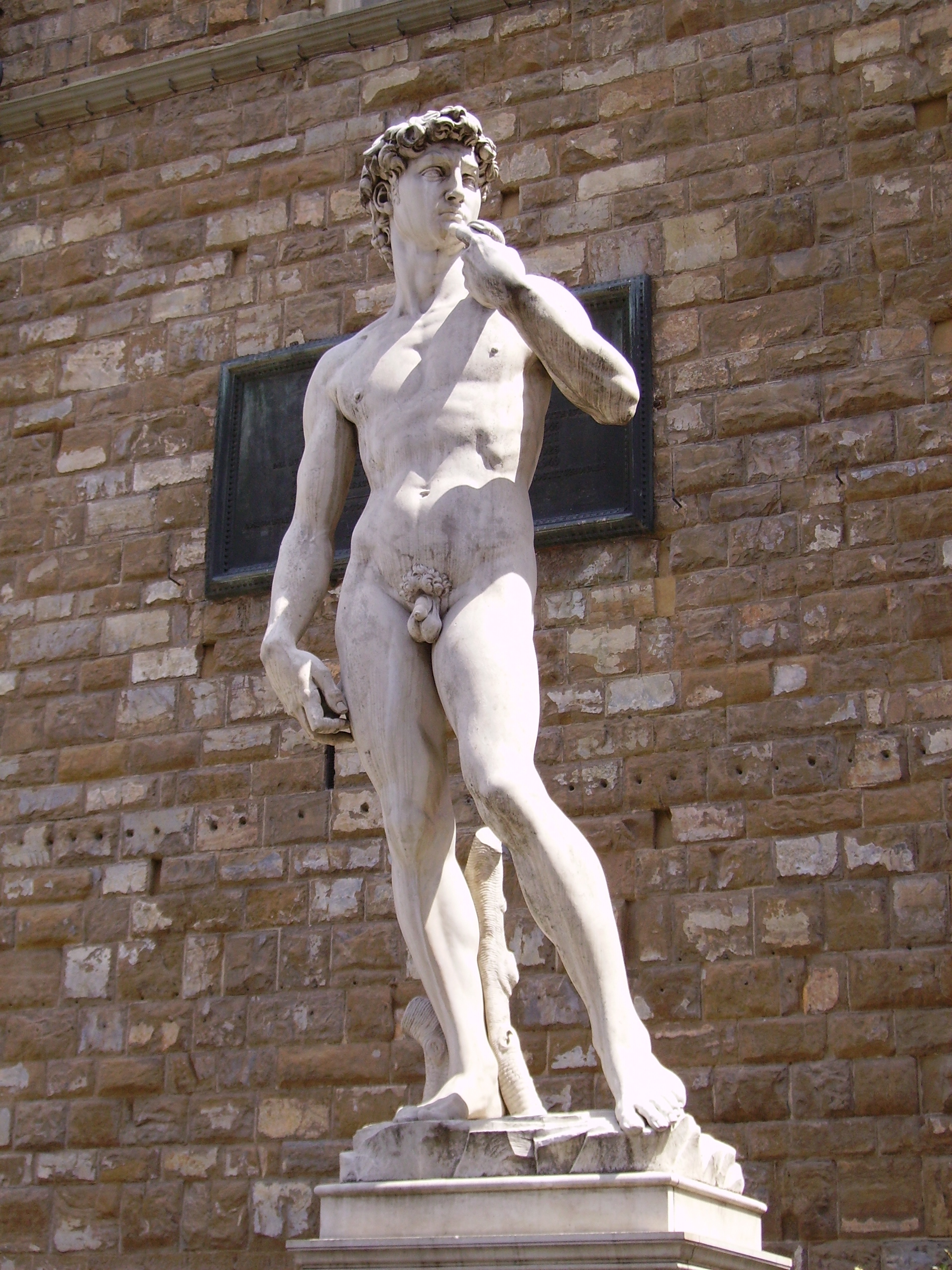
Though Leonardo was extremely talented on his own, another man of the High Renaissance struck people in awe with his works. His name was Michelangelo Buonarroti, born 1475 and in Italy as well. In his early years he would spend his spare time drawing, which in the beginning his father was not pleased and beat him many times until he came to the realization what talent his son possessed. Michelangelo started working as an artist at age thirteen apprenticed by a painter named Domenico Ghirlandaio and at seventeen went out to seek work as an artist on his own. Through his life Michelangelo was always in the sight of wealthy patrons and other highly placed individuals. He was not just a sculptor but an architect, poet, and painter. In the 1500’s Michelangelo sculpted Mary cradling Jesus across her lap, this was called “Pieta” (meaning pity or compassion). After sculpting the Pieta and David, Michelangelo was asked by the Pope to construct a masterpiece on the ceiling of the Sistine Chapel which took him only four years to complete. After the revel of this breathtaking painting the people saw him not only as a great sculptor but as well as an astounding painter. Michelangelo painted until he died at age seventy-six; he was very involved with his family but never married. 
Leonardo da Vinci and Michelangelo Buonarroti were both not only outstanding artists who contributed much to history, but among the greatest (if not the greatest) artist’s of all time. Leonardo had numerous talents and they ranged in many areas. Michelangelo, though moody and competitive, had a talent that could only be sought out to admire in our world. Both developed iconic art pieces such as for Leonardo da Vinci, his famous works were the Mona LisaThe Last SupperVitruvian Man. Michelangelo’s well known works consisted of DavidPietaSistine Chapel ceiling, and The Last Judgment. If observing both artists and their works, you would find that they have an eye for extensive detail, steady hands, and an amazing mind to be able to create every painting and develop many ideas that were added to our history. 


Michelangelo Buonarotti, David


Michelangelo Buonarotti, Pieta


Michelangelo Buonarotti, Sistine Chapel ceiling


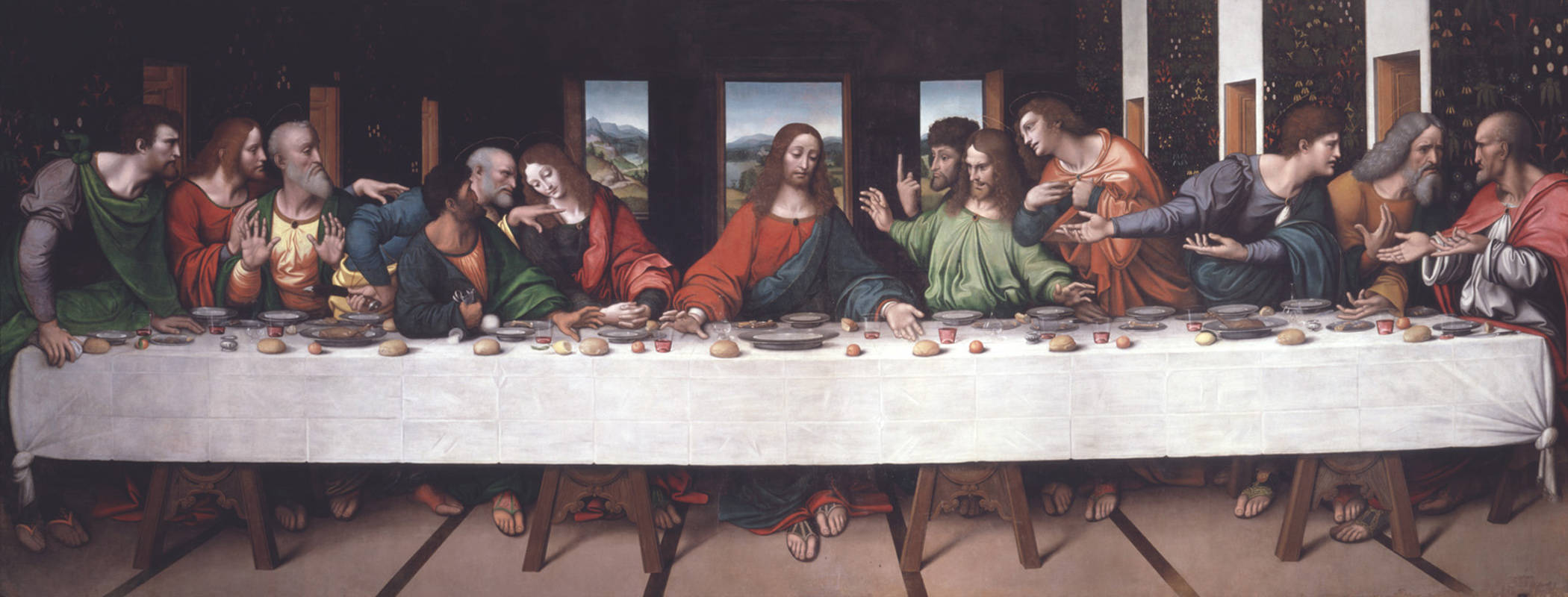
Leonardo da Vinci, The Last Supper


Leonardo da Vinci, Mona Lisa

Leonardo da Vinci, Vitruvian Man